If you’re interested in hearing various poets read their work from the comfort of your own chair, check out Gyroscope Review’s annual line-up of daily poets’ offerings. They’ll feature a different poet every day during the month of April.
On May 1, I’ll be featuring Luanne Castle in my next conversation with a poet. We’ll discuss her chapbook, Our Wolves, and poetry in general.
In other news, I’m traveling this month, so my next post will be from the road.
I’m writing this over a couple of unexpected free days while my granddaughter, Maeve, stays home with a nasty cold instead of her usual Monday and Tuesday with my partner Mick and me. I am grateful she wasn’t here when the garage door broke Monday, forcing us to call someone to repair it as soon as possible. We were going to run to Target before Mick’s softball game for a brace for his injured thumb (a hiking mishap), but a spring broke, rendering the garage door opener useless. The two-car-wide door is too heavy for us to open manually. So, I wrapped Mick’s thumb instead, he called a teammate for a ride to the softball game, and I stayed home to wait for the repair technician. While I waited, I did research for an upcoming One Minnesota Crone post.
It wasn’t long before a guy named AJ rode up our driveway in his white truck with assorted ladders and garage door parts in the back. He replaced the springs as well as the rusty cable that was only a thin strand away from snapping. Now the door works beautifully.
If only we could fix bigger things so easily. Things like minds slammed shut to new ideas, scientific evidence, and thoughtful discourse.
Last week, I didn’t watch all of the State of the Union address. It wasn’t a matter of disinterest as much as whether I could stand to watch the combative behaviors on full display by our elected representatives. I did watch the last 15 minutes or so, relieved to hear President Biden deliver a fiery and coherent address. Then my relief turned to dismay as Alabama Senator Katie Britt gave her weird, creepy Republican response from the damn kitchen. Why, oh why, would a professional woman agree to such a setting for a speech of this importance? And why would she use a baby voice, enunciating every word like she was in high school drama class, to talk to grown-ups? Never mind that the response also lacked factual substance. I felt, for a few minutes, like the slide of our country into a heap of smoldering wreckage is inevitable, with these divided sides that will not work together even when it’s in their best interests to do so. The opposing views of how this country could and should function share almost no common ground, both sides vilifying the other, civil rights sliding backwards for women, LGBTQ+, and others who are not old white men or their complicit wives. Education goes undervalued. Critical thinking does not happen.
What does happen? Knee-jerk reactions. Fear-based gossip. Immigrant stories told without all the supporting facts. Potential solutions shut down before they can be tested. Minds closed. Guns drawn.
And elected officials more concerned with re-election than doing the right thing.
I cannot and will not let that be where my mind stops.
There’s something about pouring paint, tilting a surface to make the colors run off the edge, swiping a silicon wedge across that same surface, then running a kitchen torch over everything to pop air bubbles that soothes me. The tactile-ness of it. The quiet of it. The elementary activity, using colors that match my mood or reflect what’s happening outside. This is where I go when I’m not writing, when I need another creative outlet, when my thoughts will not be still.
I can’t paint when Maeve is here. She is two-and-a-half; wet paint is a magnet for her little fingers. I save the kid watercolors for her, nontoxic paints that I can wash off her hands. My hands are encased in nitrile gloves, damp shop towels at the ready, an old apron over my clothes.
This week, the colors I use are mostly blues: phthalo blue, cerulean blue, light blue. I decide to toss in some silver. I like hints of shimmer. Titanium white for the base color.
My mind wanders as I mix the paints with Floetrol. When did Democrats become associated with blue? When I Google it later, I learn that the New York Times used blue for Democrats and yellow for Republicans in a special color map way back in 1908 to show the details of Teddy Roosevelt’s election, but red states and blue states weren’t a thing until 2000. I think red, the color of anger, is the better choice for Republicans.
But I’m not here to focus on anger.
Opening a closed mind is a lot harder than opening a broken garage door. At least with a garage door, the broken spring is unmistakable. The rusty cable is right there in front of you. You remove the broken bits, replace them, re-engage the opener, and voila. You can open the door, take the car out, get to Target or softball or the next volunteer gig. You can go to work, to school, to the doctor’s office – all with your own vehicle that you’ve been lucky enough to park in a garage.
Lucky. That’s the part we forget about a lot. If I were someone fleeing a war zone, a drug cartel, or climate change that rendered my land unusable, a garage door is not something I’d be worried about. It would be down to basics: food, shelter, safety. Closer to home, if I were trying to get away from an abusive relationship, I’d be worried about the same things. I’d be pretty pissed off, panicky, and sad if there was nowhere to go, if no one would give me or my family a chance to live.
What someone is worried about or running from is not always visible. We can’t always see when someone’s luck has run out, especially when we’re not even aware of our own extremely good fortune.
I think a lot about how mean everything feels right now. How many people are upset over immigration policies and health care and school curriculums and support for Israel vs. support for Palestinians. How Russia’s unending assault on Ukraine has become a hum in the background.
Four years ago this week, things shut down because of COVID. For a brief time, we seemed to be united in trying to do something right, something good. Most people tried to be careful, respectful, sympathetic to those who lost family members and friends to COVID. Then some started chafing beneath COVID restrictions, George Floyd was murdered, Trump tried to overturn an election, anti-vaxxers raised hell. Compassion dwindled in supply.
We’ve never recovered.
I’ve thought and thought and thought. How do we move forward from such a fractured place? I said earlier that I wouldn’t let my mind stop at the reactionary view offered in Katie Britt’s post-State-of-the-Union address. And I mean that, but, damn, it’s hard to get past it. Every day, I can’t resist the pull of the news, absorb story after story that involves violence, misinformation, selfishness, more reactionary talk. Sometimes, it’s overwhelming and I take a break for a day. But then I’m right back at it, convinced that it’s better to know what’s happening than not.
There need to be more stories of compassion. Less lashing out in anger. More listening. More of that thing we learned in elementary school about putting yourself in someone else’s shoes. I said earlier that there is almost no common ground between the two political sides. Not none. Humans all want to be happy and safe.
Life Stuff: Poems by Rose Mary Boehm, Kelsay Books, 2023. Paperback, 156 pages. $23
Life Stuff is a collection of poems that examines events from poet Rose Mary Boehm’s entire life – her childhood in WWII Germany, parenting her children in London, surviving an operation for a brain tumor while living in Madrid, making a life with her second husband in Peru. Everything is up for consideration as if Boehm is getting her life in order. After all, her author’s note tells readers, “I have reached the last installment of my life…….memories and musings…”stuff that comes to mind” when you start thinking too much.”
The very first poem in the book supports that idea of things coming to a finish before the work takes off to encompass a lifetime.
EMBERS

I live in the embers of fires
that once were fierce. White, gold,
red, amber conflagration.

Youth.
Needs must.
No prisoners.
No forethought.
No consequences considered, torching
what came near enough, and the iceman a chimera
whispered about by shivering old women

no longer strong enough to hold the flames.
I have felt his breath in the shadows.
Last night he held my hand, sightless, unforgiving.
For those of you who don’t know Rose Mary Boehm’s work, she has published eight poetry collections, two novels, and been nominated for Pushcart and Best of the Net prizes. It’s worth noting that all this work is in English, which is not Boehm’s first language. But it is the language she adopted quite some time ago as a young woman raising her children in London, and the one she continues to ply as she examines life’s wonders and intensities.
I first became aware of Rose Mary Boehm this past December when I read work as part of a Kelsay Books publication event for several of their authors. She contacted me in January after reading my conversation with Laurie Kuntz here on One Minnesota Crone; another poet conversation was clearly in order. Here it is.
OMC: Hello, Rose, and thank you for taking the time to have a conversation about your work. Life Stuff is quite an expansive collection of poetry. I was particularly engrossed in the poems about your childhood in Germany. Seeing this historical period through the child’s lens is interesting because children tend to offer up the wonders right in front of them, not understanding what they don’t have, even as their brother offers them a teddy bear while waiting in the bomb shelter. It’s the child’s day-to-day life that is foremost, the warm eggs stolen from the neighbor’s hen house, the candles for the Advent wreath, the matter-of-fact-ness about whether a father’s train will get bombed and make him late coming home.
And, of course, there is so much more that follows the wartime poems. There are the poems that show how you reinvented yourself over and over, adopting new languages and cultures, making English the language you eventually used for your poetry.
Would you mind talking about the initial idea for this collection? Did you intend this as a final poetry collection, or as more of a poetic memoir that gave you a way to look back over your life thus far and make sense of it all? What is it you hope readers take from this work?
Rose Mary Boehm
RMB: I think it was a bit of both. Perhaps my final collection and looking back. I think looking back came first. At my age the thoughts often go back into your past, evaluating, wondering, ‘mining’ as in, what’s the stuff I am made off? Who made me who I am today? How did I get from there to here? And so on. I admire memoir writers who seem to have a relatively clear film of their past. Even though my memories go further back than many others, they come as impressions. Not in a time-lined stream of recollection, not in order of occurrence.
Once I passed 80, I became more and more aware of my eventual finality, that I am at the end, not at the beginning. And my poetry changed to the more narrative kind, trying to capture moments that appeared like shreds of fog floating by, condensing, thinning, condensing…
When I had quite a few of these poems, it made sense to put them all together into a manuscript that just may be my last one.
OMC: That makes sense, especially the part about the memories not coming up in order of occurrence. There is an organic shape that takes hold. Is there a poem from Life Stuff that you feel really anchors this collection? Or, perhaps, a poem from each of the two sections?
RMB: Uff, that’s a difficult one. But on turning this in my mind, I feel that the lead poem, “Embers”, takes me (and hopefully the reader) into that realm where you begin to re-assess what’s been, whereas the rest are the consequence of this re-assessment.
“Embers” also leads to Part II, where perhaps “How to Prepare for my Final Flight” takes us to what, one day, will be the conclusion of my journey. It also hints at the fact that I am not alone. I am fortunate enough to still have a loving and beloved partner who will probably outlive me—he is younger than I am—and at that I am not a believer in the traditional sense.
OMC: I felt that way about both of those poems, too, but I know it’s difficult to choose one or two from a collection this large. They all have their weight. In one of your poems, you talk about not burdening your children with all these stories unless they ask – “Nobody at This Address” on pages 35-36. Have they read this book? Have they asked?
RMB: I really don’t know, and I didn’t ask. Yet. They live in London, I live in Peru. There has been much hurt on both sides over the years. Now they are adults, have built their own lives, and we are good. I am still not sure how much they want to know, but I am sure they will ask the moment I am no longer here. They have read other collections.
OMC: As a writer who has been creating poems for a very long time, what have you found works best for you when you are putting a collection together for publication? Waiting until you’ve had several published in journals and then seeing if they can come together in a book, or having an idea that guides you for an overall theme, or something else?
RMB: Even though I wrote all my life – I have quite a collection in German (I was very much inspired by Rainer Maria Rilke, Hermann Hesse, Christian Morgenstern, Kurt Tucholsky, Erich Kästner, Eugen Roth, Hans Magnus Enzensberger, etc.) and even though I became a copywriter later in life, even though I tried my hand at novel writing, I began to write poetry in English very hesitantly at first, then with more courage. Publishing my poems was still not even a twinkle in my eye when I began again, after I retired at 66.
Publishing mostly poems that had already been published in online poetry journals and print anthologies was the first step. It didn’t occur to me until after I published more and more that perhaps someone would be interested in publishing my poems as a collection.
OMC: Do your German poetry collections offer the same territory – memories of growing up in Germany during the war, raising your children, etc.? Or do you delve into different places in your native tongue?
RMB: When I wrote in German, I was still at a time of my life where I thought that my contributions—in whichever form—would make a dent in the way the world works. So, yes, many of my poems were influenced especially by the political poets, and those who made fun of the establishment. I also notice quite often that certain ideas for poems come from this well of influences in ideas and language. I have been known to write some short, quite surreal poems, inventing a little guy called Mungo. There are 25 of them, and they have been published in The New Absurdist. Responsible for these is fabulous German poet Christian Morgenstern, whom I still admire and love to this day. His poems were often gently funny, poking the sleeping bears (the politicians) and/or incredibly playful. And if Morgenstern could write “Fish’s Night Song”, then anything was possible.
Fish's Night Song
OMC: Okay, that’s fun! Thanks for sharing “Fish’s Night Song”. What other creative pursuits do you practice and how do they fit with your writing practice?
RMB: I started out with the piano. Stage fright prevented me from playing publicly. I then concentrated on mastering more and more difficult and satisfying composers. I always had a piano or access to one, somehow, whenever I settled somewhere for longer periods. Here in Lima, we live in a flat, and it became increasingly difficult to play when the need touched me. That’s when the neighbors slept – either their siesta or their night sleep. The piano is now the heart of a music room in a school for the less privileged children on the outskirts of Lima and has a life again. I used to sing but lost my voice to age. I painted and exhibited in group shows when I was very young, and I drew and had a solo exhibition in London. I no longer have the means or the need. Writing is now my only creative outlet.
OMC: As a mature poet, has your idea of what poets contribute to the world shifted over time and how? What do you feel is your most important contribution as a poet?
RMB: Yes, it has shifted. When I was young—as we do when we are young—I thought I could change the world with my writing one day, when my writing would be read. I also needed to express the melancholy and angst of youth. When I began to write poetry again after 70, I didn’t really think of contributing to anything. I just enjoyed the gift I had been given to string words together and make something special, beautiful, paint pictures—that’s it: I painted pictures.
Now I hope to open some reader’s heart and mind, hope they enjoy the pictures with me, feed on my vulnerability. It usually takes one to open up for the other to dare to look. I would love to touch a string here or there where my music resonates with someone who perhaps never before dared to look too closely.
OMC: After a lifetime of reinventing yourself, what brings you the most satisfaction now?
RMB: My husband, my children, my grandchildren, my poetry. And not always in that order.
OMC: What’s next for you?
RMB: To travel to Europe at least one more time and see my loved ones: kids, grandkids, friends. Another book perhaps? I have an idea.
OMC: Well, I hope you bring that idea to fruition. Thank you, again, for offering a glimpse of the person behind the work. I’d like to close here with some sample poems from Life Stuff.
This first poem is from page 22 and first appeared in Writing in a Woman’s Voice. I was struck with the child not knowing what she was missing.
APPLE CRUMBLE WITH LOVE

I didn’t know about grown-up desperation
then. Had got used to carrots, potatoes, and water.
Didn’t mind porridge made with wheat ground in Mum’s lap
with our old coffee grinder. Had no idea what coffee was.
I knew whey, not milk. Butter was a foreign word.
There was something nice in a slice of dark bread
with a layer of mashed potatoes. Sometimes
I brought home an egg, stolen, still warm,
from under one of Frau Keller’s hens.

For my birthday Mum made an apple crumble
with flower, water, and a few apples which
had overwintered in a drawer, wrapped
in newspaper. At the time I didn’t understand
why Mum was crying when she tried to
prize the beautiful apple crumble from
the baking tray with a hammer and a chisel.
This next poem struck me for its demonstration of how one might get used to reinvention. It is from page 63 and was first published in Lothlorien Poetry Review.
A QUESTION OF BELONGING

Where are you from? they ask,
and I can’t tell. The more urgent
their enquiry, the less
I understand the question.

My mind contemplates
geographies and deeper places
excavated by fear, love, desires,
and the grand fugue.

I pulled in my roots a lifetime ago.
They now hang suspended in mid-air,
needing nothing more than
an affable welcome.
For more information about Rose Mary Boehm, visit her website HERE.
To purchase a copy of Life Stuff by Rose Mary Boehm, visit Kelsay Books HERE.
Happy belated Valentine’s Day to everyone, whether you have a partner or not. Everyone deserves a little love.
The week before last included a little down time for Mick and me while we visited my brother and sister-in-law in Florida. We saw amazing wildlife at J.N. “Ding” Darling National Wildlife Refuge on Sanibel Island and in Six Mile Cypress Slough Preserve, watched for manatees at Manatee Park, found horrifying left-over hurricane destruction in Fort Myers Beach, meandered through ArtFest Fort Myers, and toured the Edison Ford Winter Estates. We crammed a lot into four days, and I’m grateful to my brother and sister-in-law for carting us around, suggesting where to go, and letting us stay with them. It’s lovely to be cared for as a guest in someone else’s house, a very different experience than staying in a hotel. After spending several weeks recovering from post-holiday pneumonia, this was just the ticket.
Here are a few highlights:
Can you find the screech owl? We almost missed him, but a photographer who found him clued us in. This was at Six Mile Cypress Slough Preserve. I couldn’t take my eyes off the banyan trees at the Edison Ford Winter Estates.This Sanibel Island heron was as mesmerized by the waves as I was.Sleepy gulls and one sandpiper scurrying between them all.An osprey soared overhead at Ding Darling.Can you find the alligator? These animals really know how to blend in – at Six Mile Cypress.
And now I’m back in too-warm-for-real-winter Minnesota, planning ahead for the next conversation with a poet here at One Minnesota Crone. On March 1, I’ll feature Rose Mary Boehm. And I have a conversation with Luanne Castle planned for May 1. I’m also planning to travel to Italy with Mick and some friends, so there will be much to share with you in the months ahead.
The end of January and beginning of February in Minnesota should be bone-chilling, with snow that comes up to my knees, and frosty window panes in the garage that sparkle in morning sun. I should be turtling into my warmest sweatshirt, mug of steaming hot coffee in my hands.
That is not the case. I’m drinking my coffee while looking at a snowless backyard through my living room window, cursing the squirrel who just dug up a scilla bulb for breakfast. The pachysandra is green instead of buried in a blanket of white. There are no little bunny tracks across the backyard, no deer tracks in fresh snow alongside the house.
While I’ve enjoyed the break from keeping our driveway snow-free, in my bones I know this is wrong. Such a warm winter, lacking in the snowpack that protects insects, small animals, and plants during their slumber season, makes me wonder what damage is being done. We’ve had exactly nine days of really cold weather – the rest have all had above-normal temperatures. It rained all day on Christmas, something unheard of here. The past week has been foggy, any traces of snow melting away. Last year, we had 90 inches of snow for the season, more than half of it on the ground by this time. This year, we’ve had 7.3 inches so far and we aren’t expecting any for the foreseeable future. What will spring look like this year? And how early will it arrive?
Even though there’s little of winter to escape, my partner Mick and I are Florida-bound this week. We’re going to visit my brother and sister-in-law at their place in Cape Coral, look at the sunset over the Gulf of Mexico, marvel at manatees, and just hang out. We’ll take sports sandals for walking on the beach, since there is much foot-slicing debris from the last hurricane washing up on the sand every day. Florida, too, is changing, with hurricanes more devastating than they’ve ever been. Mick and I want to see some of its natural beauty while it’s still there to be seen.
I’m determined to find some joy in this strange non-winter. The day I wrote this post, I gave myself a moment to look at the brilliant red sky at sunset. I watched a white squirrel scamper up the dark bark of our oak tree. My two-year-old granddaughter, Maeve, and I made snakes out of Play-Doh and gave them little hats. When Mick and I walked around the neighborhood with her, she ran between us until she tripped on her snow boots, heavy on her feet while walking on our snow-free street. She picked herself right up and ran again, a perfect demonstration of resilience.
It’s resilience that we all need as we navigate this changing world. It’s resilience that I hope the garden and the animals that depend on the absent snowpack have, that this too-warm winter won’t kill them all. It’s resilience that the people whose homes were destroyed in a Florida hurricane will need to create another home that shelters them. And I think finding moments of joy in these months that aren’t what we expected is the thing that makes our resilience bloom.
So I’m off in search of joy. I’ll let you know how it goes.
header image courtesy of Christophe Schindler from Pixabay.com
That Infinite Roar by Laurie Kuntz. Gyroscope Press, 2023. Poetry chapbook, 63 pages, $16.
Today, I’m in conversation with poet Laurie Kuntz, who has not only written several poetry collections, but also produced documentary films, taught creative writing, and edited poetry journals. We’ll discuss her latest poetry collection, That Infinite Roar (Gyroscope Press, 2023), and talk about poetry and creative process. As always, I’m interested in what makes a poet produce the works that matter to them.
Read on and enjoy a peek into Laurie Kuntz’s creative life.
OMC: Hello, Laurie! I read That Infinite Roar a few times over the holiday season and found that it was a nice, quiet space away from the daily frazzle of activity. Your poems are spare in a way that reminds me of haiku. I appreciated their focus on the small things that are the integral foundation of what matters to us most. And I found myself looking things up, like the Japanese word, komorebi, and learning more about the Japanese sensibilities infuse parts of this collection.
As I thought about the big topics in That Infinite Roar – aging, commitment, loss, and love – I kept coming back to those daily moments that anchor your poems and nudge readers toward mindfulness. This is something that resonates deeply with me, as appreciation and savoring of ordinary moments are a big thread in my own work and life.
Can you talk a little about the genesis of this collection, if there was a moment that sparked the poem that sparked the collection? Or did it start taking shape as you noticed a few poems talking to each other?
Laurie Kuntz
LK: I love that you picked up on the concept of haiku. I lived in Japan for 23 years and the haiku form greatly influenced my work. I love the concept of human nature reflected in nature, which is the basic element of the haiku. Many of my poems attempt to focus on the small details of life that reflect larger themes. If I have to pinpoint the moment these poems became a collection of poems that work in concert, I would say when certain poems started talking to each other. I love that image of poems talking to each other. Much of my recent work is about aging, which is personal aging and the aging of relationships. When I choreographed the poems, I tried to have the poems be in concert with each other. For example, the poems in the first section of the book, which is introduced by an epigraph by Gena Showalter, “A whisper can become a roar,” focuses on poems about the roar of growing and sharing life experiences with a partner. The second section, which opens with the epigraph by Mary Oliver, “I have my way of praying as you no doubt have yours,” includes poems that deal with relationships with sisters, friends, family, and a partnership with the world. The third section of the book opens with another epigraph from Oliver, “The world offers itself to your imagination, calls to you like the wild geese, harsh and exciting;” the poems in this section are mainly about mothering in all of her stipulate definitions. And, the final section with the epigraph by Mandelstam, “I sense the spreading of a wing,” are poems offering hope and light and empathy. That final section features poems that reflect the other three sections and work to make a final statement about the thematic structure of the book.
OMC: And your poems talked to each other well throughout the collection. Poetry truly is an ongoing conversation – poet to self, poet to reader, poet to some higher consciousness perhaps, and then reader to reader once the poems are out there in the world. If that conversation keeps going, the poet has done their job well.
I listened to your recorded reading for Poetry and Prose for the Planet. There it was again, that spare, quiet sensibility with so much to say through deceptively small events – the butterflies after an unusual amount of rain in Los Angeles, the sea off the coast of Japan sweeping a mother’s offering into its maw as she walks away. I also read your interview in Moment Poetryand saw that you consider haiku masters Issa and Basho as an influence on your own work, which made me say ah ha! to myself. That’s why I was reminded of haiku as I read your poems. I would like to know how you define your territory as a poet, what you see as the topics that come up again and again for you.
LK: When I first started writing poetry seriously, I was living in Thailand and the Philippines, working in refugee camps educating Southeast Asian refugees bound for resettlement in the U.S. So, much of my work focused on displacement, trauma, and assimilation to a new culture—all were a reflection of the experiences that the refugee population I was working with were having. I considered myself a political poet–then at the age of 36, I became a mother, which gave me an entirely new political spectrum so to speak. My poetic territory widened. I was living as an expatriate in Thailand, the Philippines, and for most of my adult life, in Japan. My world enlarged as a parent, a witness of people displaced because of war, and of living in different cultures and assimilating to the various cultures, languages, and lifestyles. The topics that come up in my poetry are a pastiche of all of these experiences. And yet, each of these varied experiences is a sum of focusing on finely tuned details and an appreciation of the world and its diverse offerings. I think poets have to have a keen eye for the minute details of daily life that bring about bigger realizations.
OMC: I absolutely agree! This is another aspect of our job as poets – to bring about those larger realizations through observance of daily life. Your perspective is broad, which is such a valuable thing in the world at this moment. Your experiences living outside the US are such a rich thing to draw upon. As a mother myself, I learned that parenthood brought about a stronger sense of the political than ever because suddenly I had this little life that I was responsible for helping shape and everything seemed more urgent. Parenthood is a different lens through which to view the world.
I know that you spread your creativity to a lot of projects – documentaries, teaching, editing. I’ve long thought that the more we use our creativity, the more we have to offer. In other words, it doesn’t get used up; it grows and grows. Was poetry your first love or were there always side-by-side creative projects going on for you? How do you see each project rippling into the others?
LK: Poetry was absolutely my very first love. One of my earlier chapbooks, Women at the Onsen, is dedicated to my father who sat me down when I was very young to read me, “Casey at the Bat,” then he read, “The Face on the Barroom Floor,” and it went on from there… So, poetry was my first creative effort. I have a terrible singing voice, I failed miserably at the piano and flute, ballet lessons were a big waste of money, and I can barely draw a stick figure. My creative outlet was always poetry. My 9th grade English teacher read the ee cummings poem, “Dying is Fine,” and that inspired me to become an English teacher. I thought if I could make money (albeit very little) by reading poetry to others, that is the profession for me! Although I am not creative in the other art forms, I do feel that poetry is a strong link to my humanity. All my endeavors and relationships are influenced by my poetic spirit and bent. I look at the world with the detailed and empathetic eye of a poet.
OMC: I’d like to share two sample poems from That Infinite Roar to let readers get a taste of your new work. The first one is the first poem in the collection, “I Need a Title.” I wasn’t quite sure what to make of this poem the first time I read it – laugh? Understand the difficulty of titling a collection? Think of this one as a peek into your whole poetic process? I decided to enjoy the humor lurking around the edges, sitting side-by-side with the very not-funny line, “All that I hoped for, you rejected.” This is a little intimate slice of a poet’s life.
I NEED A TITLE


for a new collection

of recent poems.

My top choice:

"First Snow, Last Rose,"

you frowned, not again with flowers,

stay away from roses and moons and Junes.

My second choice:

"The Empty Heart,"

No hearts, no pinks, no puff of clouds...

All that I hoped for, you rejected.

I begged a title to yell that infinite roar

I hear in my heart, that I see in every pink

bud of the first rose that I wait for,

or in the moon waxing its round voice.

Then, there is that first snow

that bides me to hibernate, then renew.

What about that infinite roar?
Can you tell me about the creation of this poem and your choice to lead the collection with it?
LK: Funny you should ask because I loved working with Constance Brewer, the editor of Gyroscope Press. We had the same vision for the overall feel of the book; however, she thought this poem should go at the end of the collection, and I wanted it at the beginning of the book. I thought it was a good introduction to the process of putting a collection together. For me, the title for the book comes after all the poems “have auditioned” and find their place on every page… then, I look at the collection as a whole and come up with a title befitting the energy of the book. I was having trouble with birthing a title for this collection. I also like to use lines from my poems as titles rather than taking a title from one of the poems to be used as the book’s title. Truth be told, basically this poem came from a conversation I had with my son. He is a documentary filmmaker, and I find filmmaking and writing are composed of similar creative elements, so I often turn to him for editing suggestions. I fed him some lines from poems that I was considering using as a title, and his responses were basically the italicized lines of this poem. This poem came from a conversation I had with my son about choosing a title. As I was going through the manuscript looking for possible titles, I read the poem, “First Banana,” which is about quenching hunger resulting in a passionate roar–the line in that poem spoke to me, and that is how I came to the title of my book and the writing of this poem. I wanted to begin the collection with this poem as it speaks to the process of choreographing a book, and it also speaks to one of the themes of the book, which is finding a thrill in all the passionate roars that life can offer
OMC: Thank you. I did wonder about the line, that infinite roar, showing up in, “First Banana,” so I’m glad you answered that question here. My son is a visual artist here in Minneapolis and I often bounce ideas off him, too. It’s nice to have another creative nearby. He created the artwork on the cover of my first chapbook, How We Learned to Shut Our Own Mouths. That made me so happy.
The second poem of yours I’d like to share is one I’ve chosen specifically for its great fit here at One Minnesota Crone and that’s, “My Wisteria.” By the time I came to this poem, I was already looking things up for meanings I may otherwise have missed, and the word wisteria in Japanese is fuji, which symbolizes youth, love, perseverance. Wisteria flowers can stand for resilience and longevity. This is something I think about with the continual bloom of creativity in women over 50, so this poem practically screamed at me to share it.
MY WISTERIA


Stagnant in December, a bare stick clinging

to a trellis--like a woman

stranded in the wind without the proper overcoat.


Memories of cicada filled nights,

and perfume, its scent

misting veranda lamps with ribbons of light

pouring on purple petals.


She remembers:


A lilac shawl draped over her.

In her season,

she was cloaked in everything that flowered.


Now, another year etches

itself on her gnarled branches.


She has no choice but to be content

until the murmurs

of all that blooms purple


happen, yet once again.
What can you tell me about this one’s origins?
LK: You are spot on with your interpretation of this poem. I lived in northern Japan in a very rural town. Wisteria was one of the flowering vines that draped every entryway to many of the houses in my little town. I loved the fragrance, the beauty and the voluptuousness of its essence. I also loved that it had a very specific season and when its season came to an end, it rested until it bloomed again. I likened this to the aging of women… we have our resting periods and then in every season of growth and aging we learn to bloom in our own specific ways.
OMC: There were so many poems in That Infinite Roar that I loved that I’ve decided I will never choose a favorite. But I am going to ask you if you have a favorite in this collection and what it is?
LK: Ah, to get a true answer to this question, you would have to ask me this on a daily basis. My favorites change all the time. But, short answer, I do have favorites, long answer, my choices are dynamic according to my feelings. I do especially love, “Anniversary, Again,” which by the way was nominated for a Pushcart and published in One Art Journal, I also love, “Old Married Couple Cutting Watermelon,” which was published in Gyroscope Review, and my son and my amazing daughter in law are visiting me today, so today, my favorite poem is, “Pinky Promise,” as it is a poem that I wrote for them, which was read during their wedding ceremony.
OMC: Changing your favorite on a day-by-day basis is fine with me! I always have trouble picking favorites, so thank you for indulging me with that question. What is the next creative work for you now?
LK: Well, I am working on a new manuscript, tentatively titled Shelter in Place, with new poems still dealing with mothering, partnerships, politics, and detailing the world through an empathic eye. And, of course my creative work includes a daily dose of living with appreciation and gratitude for the life I have and the people I share it with.
OMC: Gratitude is so important. It makes all our lives better, richer.
Do you have any other recent works of your own you’d like to give a shout-out to here? Is there something wonderful you’ve read by someone else that you’d also like to share as we head into 2024 armed with our fresh reading lists?
LK: My recent works have been playing with the stipulative definitions of specific words. That is, writing a poem about a single word… take the word round. I recently wrote a poem about all of the meanings that the word round can have and how it affects my sensibilities. I am trying this with words like copacetic, euphoria, kindness — just experimenting and trying to broaden my style.
Here is an example of the kind of poem I am speaking of:
ROUND


A circular substance,

fleshing out the idiom--

making rounds, go around,

to move, travel, sail,

catching time in music,

and then the so many

useful shapes--

glasses, plates, balls, bangles,

apples, berries, buttons, bagels,

and clocks, that circle of time

that brings me to you--

a spin of history,

our globe of years,

and the hug--

covering me in a safe embrace

rounding us out, still and secure,

holding me so I don't fall

off that flat edge of the planet.
I also have recently read Nancy Murphy’s book, The Space Carved by the Sharpness of Your Absence, which is a wonderful collection. And, I want to give a shout out to Alison Hurwitz, who hosts this wonderful reading series, Well Versed Words. This online series features a poet a month giving a reading and interview. Alison picks wonderful poets who have recently come out with new work, and I discover many new voices through the Well Versed Words program.
OMC: Laurie, those are great recommendations. And I really like the idea of working with just one word for new poems. I might have to steal that!
Thank you so much for taking the time to have this conversation with me, and Happy New Year!
LK: Same to you, hope 2024 is giving you a stellar start! This was so much fun to do as it made me ponder my creative process and rekindled my purpose as a poet.
Copies of That Infinite Roar can be purchased HERE.
As I sat down to write this, I struggled with the idea of a “happy” 2024 given all that’s going on in the world. But it is possible to find moments of happiness even in distressing times, so a happy wish for the new year is still of value. And I’ve found quite a few happy moments in the past weeks.
The holidays have been quite unusual here in Minnesota because we have had rain, rain, rain. It should have been snow, snow, snow, although given the amount of rain that fell, that much precipitation turned into snow would have amounted to a LOT, like multiple feet of snow. All the rain made it feel very un-holiday-like. More often than not, we have snow here on Christmas. I don’t remember another Christmas here that had rain all day long. All this dark weather made the holiday lights at our house especially welcome. The tree lights have been on every day for a few weeks now, casting little bright dots of color into our living room. I’ve gone through lots of fir-scented candles. And the cooking – beef bourguignon; chicken thighs roasted on a bed of fennel, apple, and onion; turkey breast rubbed with a mixture of Aleppo pepper, rosemary, and thyme; mac and cheese with a panko topping – all added a layer of coziness. The people to whom I fed all this food were, of course, the brightest lights of all.
Switching back into work mode may be slow-going for me. I’d rather linger in this cozy-up-and-cook time for a while longer. But January promises new opportunities for writing and connecting, beginning with a conversation with poet Laurie Kuntz on January 15. I hope you’ll return to see how that turns out.
Meanwhile, Happy New Year to all. May your days have many points of light.
There are times when I love to write somewhere other than my office. That usually means a coffeehouse or somewhere outside, a place that shakes up how I work.
Today, that place is the Honda dealer in White Bear Lake, Minnesota. Having my car serviced and waiting for it here means I can be in one quiet place for an hour and a half where I can’t get up and wander into the kitchen for another Christmas cookie. (Looks around – is it possible they have cookies in this waiting area?Ah, no.) I like the change of venue, like that there are a couple of other women here also working on their laptops, a few men scrolling through their phones, and no one watching television. So grateful not to have a television blaring news right this minute. And I have a very nice service rep named Austin who has little waxed ends upturned on his old-school mustache.
As December slips toward the winter solstice, my thoughts are all over the place: holidays, end of the year, what went well in 2023, what I’m looking forward to, what I’m worried about. Making New Year’s resolutions isn’t a thing I do anymore; truthfully, I never really did make them. Change is too constant to limit it to the New Year. Rather, I find myself remembering small moments that made me say thank you every day. Right now, I’m saying thank you for this bright, clean space where I’m waiting, this comfortable chair, the holiday music that’s not too loud. Yesterday, I said thank you for finding Christmas presents for my daughter and daughter-in-law, followed by dinner out and a really nice conversation with my partner. Such ordinary things, you might think. Yes, but I wouldn’t be doing any of them if I lived in a war zone or if my home had just been hit by a tornado.
Last night, I had a restless night. Lots of unsettling dreams have drifted into a cloud in the back of my mind this morning. The details are slipping away in the light of this bright day, but the feeling that I was in danger in my dreams, that nothing was solid, hovers. Maybe this is the result of my news habit, or that I read crime novels right before bed, or that I’m worried about what the looming new year holds for the next presidential election in the U.S. Whatever the reason for those unsettling dreams, they are a reminder that we have less control over our lives than we care to admit. Our situations, no matter what they are, are temporary. Given that, gratitude for what is going well, what offers beauty in this moment, is a practice that serves me well.
So, today, from this waiting room next to a garage, I want to give ordinary miracles their due. Here are just a few recent things:
ice that outlines each spent stalk in the garden as if the stems are now encased in brilliant glass
afternoon sun through the kitchen window that creates a halo around my partner’s head while he fills a water glass
magenta streaks across the winter sky when I come out of Target after a late-afternoon run for groceries
how the next-door neighbor’s dog faces our kitchen window to watch for us every morning when she’s outside; how she howls along sometimes when she hears my partner play his saxophone through our closed windows
how our two-year-old granddaughter repeats the last thing we said whenever we stop talking
the Minneapolis skyline when flocks of birds swoop overhead just before sunset and their wings glint in the fading light
a full moon that rises in front of me as I drive home from the grocery store
an owl hooting on an early morning walk around our neighborhood and how it flies away toward the east before we can get a closer look
candlelight that makes dark winter evenings feel magical
the smell of cookies baking, vegetables roasting, coffee brewing, bread baking, or stew simmering
having a recipe turn out just right
unexpected hugs
hearing someone say I’m happy
Austin just gave me an update on my car: filters that were replaced, oil changed, tires rotated, probably new tires needed next year, a little sediment in the brake fluid but nothing unusual. Another thing to say thank you for: someone who tunes up my car when needed. Time to pack up the laptop, put on my coat, and head back out into the winter sunshine.
Happy December, all! When holiday season hits, I find myself looking for book lists in all my favorite places: New York Times, other blogs, publishers, etc. I love the year-end best-seller lists, the books that got awards, the books that made a difference.
So, today, I’m listing a few of the poetry books I’ve had the pleasure of reading since I started One Minnesota Crone, in no particular order, with links on where you can get them. My list has the distinction of including a nice selection by my fellow crones. Maybe you’ll find your next holiday gift below.
Sarah Dickenson Snyder, Now These Three Remain (Lily Poetry Review Books, 2023). Paperback, $18. Reviewed on One Minnesota Crone HERE.
Woman-centered poems that see the savagery of the world right alongside its sacredness. Magic still exists.
Nicole Farmer, Honest Sonnets: Memories from an Unorthodox Childhood in Verse (Kelsay Books, 2023). Paperback, $20. Reviewed on One Minnesota Crone HERE.
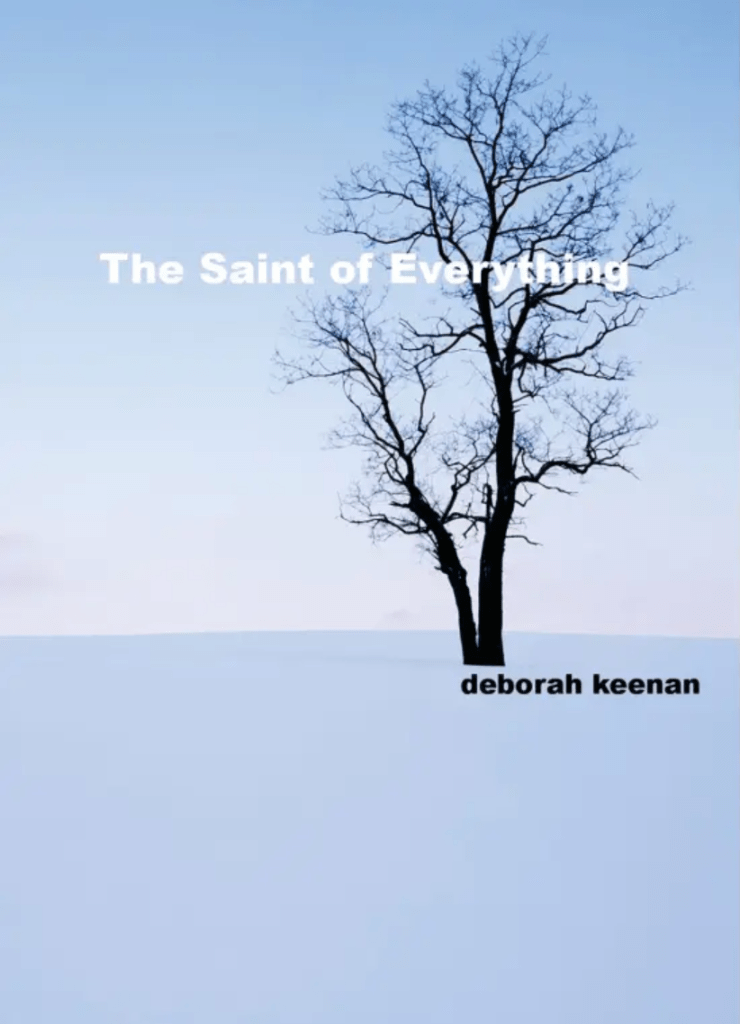
Deborah Keenan is my favorite Minnesota poet and was a beloved teacher when I was in graduate school at Hamline University. She has an uncanny way of taking the things we fear in our hearts and putting them into poems that haunt the reader with beauty.
Joyce Sutphen, That Other Life (Carnegie Mellon University Press, 2023). Paperback, $20.
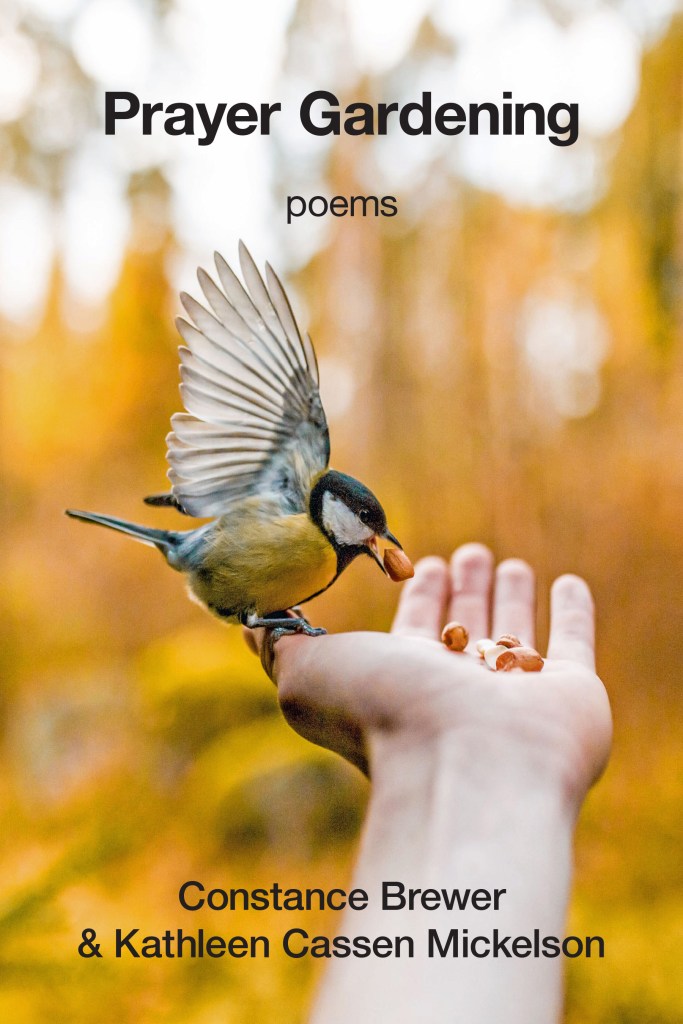
Of course, I would be remiss if I didn’t include a link to my own collaboration with Wyoming poet Constance Brewer. You can pick up a copy of Prayer GardeningHERE.
If any women poets over 50 would like to contact me about reviewing a recently-published poetry collection here at One Minnesota Crone, contact me HERE. I’d love to converse with more older women poets in 2024.
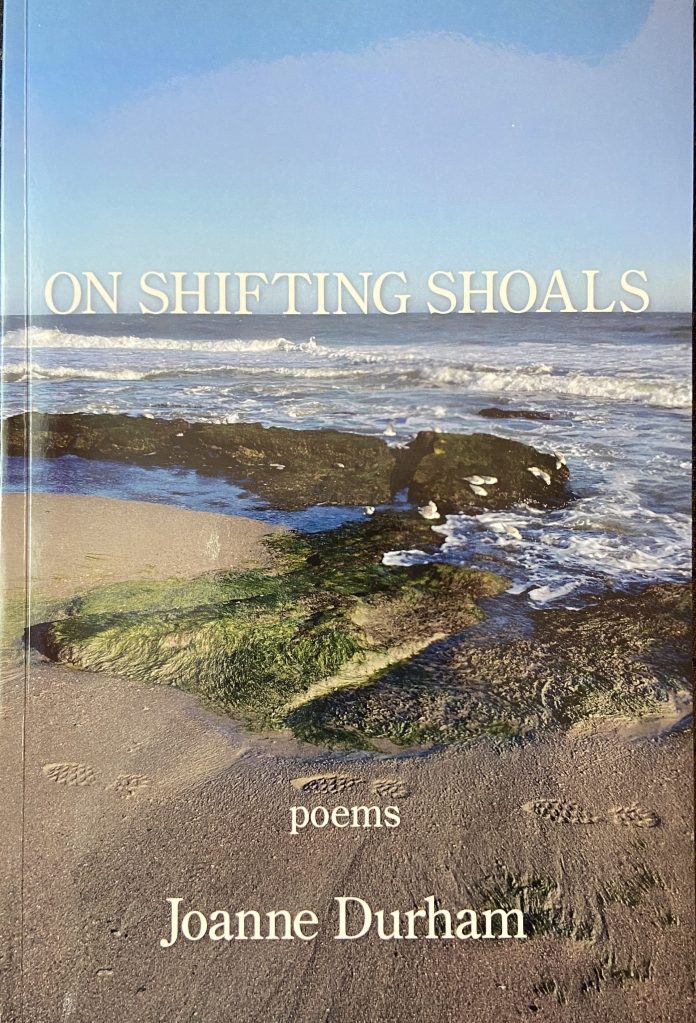
I feel lucky to have acquired several books of poetry from other mature women poets this year: Joanne Durham, Bonnie Proudfoot, Carolyn Martin, Annis Cassells, Nicole Farmer, Alexis Rhone Fancher. All of them different. All of them with distinct voices, interesting stories shared through their poems.
The latest book to arrive is Sarah Dickenson Snyder’s newest work, Now These Three Remain. The very first poem in the book, “When God Listens to Eve”, felt like an immediate connection. The poem begins with the idea that it’s hard to be the beginning, questions our origins, then shows us the rest of the world and, thus, the rest of the book. (If you want to know about the creation of that poem, see Gyroscope Review‘s Origin Stories series from National Poetry Month 2023.) Ms. Snyder offers intimate investigations of being female, questions the choices others would make for us, recognizes love in all its forms, embraces both resistance and acceptance. Politics, religion, war, and climate change ripple through, affecting the personal, shifting the world. Age-old myth lives alongside new pandemic reality. There is assurance that magic might still be found — we can define it ourselves, just as we can define faith, hope, and love.
When I got done reading Now These Three Remain, I appreciated finding another poet who follows, “…what my mind finds / like a planet devoted to spinning…” (from, “To Follow Undisciplined Ink or Having Many Things to Carry”, p. 15). This is someone who sees the world’s savagery alongside its sacredness, then puts that juxtaposition into poems that grab the reader by the throat.
Here are two sample poems, the first from page 30, the second from page 46:
AFTER TWO YEARS OF READING HEATHER COX RICHARDSON

I cannot tell if we are on the verge
of another ending, the way we lost
a collective innocence in the blue
blue sky on 9/11. Today humans stir their fear
and wrath with guns and rights, icebergs melt
and hurricanes and tornadoes whip the fiery wind,
floods and virus fill our streets, and truth
seems obsolete - is this the beginning
of another end? I remember my mother saying,
Well, if worse comes to worst, we can always...
She had a plan, had something
to defrost in the freezer, knew how
to avoid cops as she sped along the highway.
Now she's hushed in the sediment
of our pond - her ashes billowed into a ghost
before they settled. Is the world unspooling
its heft as it spins and tilts into disaster?
I want it to last. I want pesto and breath
and maybe a few grandchildren
who will swim, held in the cool water,
a clear sky rippled on the surface.
WITHOUT REGRET

The thrush chirps and flits
around my space when I invade
the place she's built her nest
for four tiny blue eggs, more candy than life.
I had to stop watering the hanging
flowering plant, watch it wither while
something hidden happened inside those eggs.
I chose the nest, didn't have to meditate on it
very long. I remember finding out
I was pregnant when I was too young.
I chose my life over what was beginning
to grow. I look up into the emptiness
and hush of the pewter sky, retrace
where I've been over and over again.
The following is the conversation I had with Sarah Dickenson Snyder after I finished reading Now These Three Remain.
OMC: Thank you for this book that feels like such a connection for mature women in particular.
When I read your poems, I kept thinking that we had a lot in common. Being women who came of age when we had choices even as others might prefer we didn’t, being raised Catholic perhaps – which I’m guessing at based on your poem, “Our Holy Symbols Need Attention” – having children, losing parents, being appalled at the state of violence and need in the world, and moving to a new kind of inner understanding of what life can be. I love the way your book begins with Eve saying what she might have wished for as the first woman in the world. What was the poem that first sparked your vision of this book? Or was it more a bunch of poems that seemed to fit together in an organic way, giving rise to the ideas of faith, hope, and love?
Sarah Dickenson Snyder
SDS: First, thank you, Kathleen, for your time reading and distilling and seeing my work. It’s such an honor when someone does that — a gift from one writer to another. These poems coalesced as a group. I was born into the world as a happy person, and it’s a lens that has never left though it has been shaken and worn down. My writing seems to migrate into places of belief in the mystery of spirituality, the importance of hope even in the worst of times, and most importantly in love and its many forms. I am grateful that my editor and friend, Eileen Cleary who created Lily Poetry Review Books, initially rejected the manuscript. She encouraged me to seek more depth, and in response I struggled and ultimately was awakened in the middle of the night making the connection of the poems to the Corinthians’ verse. [Ed. note: “…faith, hope, and love, but the greatest of these is love. 1 Corinthians 13:1] I rearranged, took pieces out, put others in, and landed at this version of the book.
OMC: That’s so interesting that you say you’re grateful this manuscript was initially rejected. That’s an important point for writers everywhere – the way we get the signal that we’re not quite done with the work, that we must take another look. We have to have enough humility to see those rejections as just that – the nudge that makes the work better. I love that you were grateful.
I noticed a lot of spiritual questioning in your work, alongside a welcoming of awe, so am not surprised to learn that places of belief in the mystery of spirituality is one of the places where your writing migrates. I kept feeling that your thread to the sanctity of the natural world was extended to your readers in these poems. One of the examples that comes to mind is this one, where you contemplate what’s beyond death:
WHERE WE MIGHT GO

Rise to a passing cloud,
slurry into unencumbered
atoms, settle in to deepness
of dirt or sea, see a god,
sit among rocks, breathe
as a body could not,
barnacle onto wing,
float in acres and acres
of air, release need,
know before-rain,
& bloom what shined inside.
Can you tell me a little more about that aspect of your work – the search, the mystery, the connection with something beyond our human realm, that does not necessarily equate with a belief in a god?
SDS: I’m a bit obsessed with death. I was so frightened of it as a child, just floored that we didn’t get to stay forever. I believe in something spiritual and invisible and mysterious. Organized religion works for many people, gives such strength and power and community. But it doesn’t work for me. I love the stories in all religions. I was a religion major in college because I saw all of them as different paths to the same place, a place of acceptance of death and an uncovering of some kind of divine love. Maybe because I’m closer to endings and because of the deaths of people I love, I can imagine my own in the not as distant future without deep anxiety. The fear has diminished. I’m a hospice volunteer. I’m a Buddhist wannabe. I believe in Martin Buber’s description of the “I-Thou” energy; something divine happens in the “between” when people truly see each other.
OMC: Seeing all religions as a different path to the same place is something I absolutely agree with. We all want to feel safe, happy, loved. And Buddhism, as I understand it, encourages understanding among all rather than dividing ourselves up into this sect and that sect. I’m a fan of Suzuki Roshi’s books. Not so familiar with Martin Buber, so you’ve given me something to look up.
To shift the focus a bit, travel shows up as a great eye-opener in your work. What places have you traveled that stand out as dramatically changing your understanding of how others live on this planet? Talk a little about the places that show up in Now These Three Remain, how they found their way into your poems.
SDS: This is a big question. I love to travel; it makes me be the most present I can be. I don’t know what will happen next; so I have to be alert, aware, and open to amazement. In 2000 when we had sabbaticals from teaching, my husband and I decided to travel around the world for six months and home/world school our kids who were nine and ten. That decision just opened a door that has never closed. Even though I don’t love to fly (that fear of death thing), I am willing to go anywhere. Since then, we’ve taken students to places all over the world. And now, we continue to travel by ourselves or with friends and family. One place that comes up in this collection is Rwanda, a place I’ve been six times. Every time I go, I’m awed by the beauty of the country and the people and can feel a palpable sense of healing from the utter tragedy there. It’s a place I feel completely safe. I also love and hope to return to Thailand, Tibet, Chile, Peru, Vietnam, Cambodia, India, South Africa, Laos, New Zealand, Scotland, Ireland, and Spain. Two of my other collections focus even more on travel: With a Polaroid Camera and a chapbook, Notes from a Nomad.
OMC: Being open to amazement is a fantastic way of putting it. Traveling for six months around the world is something few people get to do. That you’re continuing to travel rather than saying you’ve been there, done that, is right in line with continuing to let yourself be amazed. And that you feel completely safe in Rwanda, of all places, is a nice surprise.
Let’s talk about how people read our work once we put it out into the world, which marks the end of our control over it. What did you hope that people would take from reading Now These Three Remain? Have you been surprised by how this book has been received? If so, in what way?
SDS: These are good questions. I guess I hope that my writing touches someone. Maybe that’s why I let it go into the world, to seek that “between” space that’s invisible and spiritual and real. It’s so crazy that poems reach so deeply into us, that words on a page feel exactly right and uncover what we know is true. I’d love to be able to tell Lucille Clifton that her poem, “blessing the boats,” has softened death for me, that I send it to everyone I love who has someone they love die. I am so honored that you were touched by my work enough to want to learn more about it and me. It’s surprising and affirming.
OMC: Let’s shift the conversation a bit now. How are you feeling about social media right now? As poets, we’re expected to market our own work and that might mean posting as often as possible in as many places as possible. Where do you focus your efforts?
SDS: Though I’m pretty shy and sharing my work does feel like bragging, I do put links to my published poems into the world through Facebook and Instagram. I have in-person and Zoom readings and book launches mainly so the kind small presses that have published my work get business. I want them to stay in business.
OMC: Will you be starting up your blog again anytime soon?
SDS: I’ve been writing the blog when we travel, and we will be traveling at length in February through April; so I’ll probably start it up again then. When I travel, I don’t do much writing of poems, just fill my journal with things that come after the words “I want to remember…” Those images and conversations and observations then work their way into poems when I return. Writing prose for the blog feels more accessible to me on the road.
OMC: Do you have some new projects on the horizon?
SDS: Yes, I have been immersed in a crazy, wonderful project for the past two and a half years. Eve has been speaking with me. The first poem in Now These Three Remain you referenced earlier was the first poem from her. Now there are enough for a manuscript. I’m also learning new things like sculling, embroidering in paper, and knitting—all of that newness gets woven into my writing.
OMC: I can’t wait to see the Eve poems!
Thank you so much for having a conversation with me. It’s a gift to get a glimpse into how another poet finds her territory as a writer and offers that to the world. Are there any last thoughts you’d like to share?
SDS: I feel so lucky to be part of acommunity of writers who share my love of poetry — reading it and writing it. How great to add you, Kathleen, to that inspirational, lovely group. I am humbled by your kind attention to my work and to me. I look forward to reading your work and following your blog. Thank you for all you have done and continue to do to celebrate poets and poetry. If you are ever in Vermont, I’d love to meet you in person, have you up to our home for a meal. I also love to cook!
OMC: I think we would have a great time together. Thanks for the invitation!















 One Minnesota Crone