Today’s return to One Minnesota Crone’s Conversation with a Poet series celebrates the newly released poetry collection Astronomy Lessons by Constance Brewer (Gyroscope Press, $14.99 paperback).

Constance Brewer and I have some good history. We met in 2009 as volunteer editors at Every Day Poets, a poetry website that published a new poem each day. When that site went on hiatus in 2014, Constance and I joined forces and co-founded the quarterly poetry journal Gyroscope Review. We had a great time putting the journal together, coming up with new things for National Poetry Month, and spawning the now-annual Crone Issue that specifically celebrates woman-identifying poets over the age of 50. When I left Gyroscope Review in 2020 to focus more on my own work, Constance kept nudging me to submit something to her then-new effort, Gyroscope Press, and she eventually published my chapbook, How We Learned to Shut Our Own Mouths, in 2021. Constance and I kept exchanging our work, collaborating on the 2023 poetry collection Prayer Gardening (Kelsay Books, $20 paperback).
As soon as I learned of the release of Astronomy Lessons, I knew I wanted to include a conversation with Constance here.
Astronomy Lessons uses physics and mythology to delve into the many relationships that define us. It’s four sections – Scientific Method, Linear Dimensions, Orbital Decay, and Celestial Spheres – examine love, family, loss, aging, and more that makes us human. Constance uses the stars, planets, moons, myths about the night sky, and our own planet Earth to illustrate that which swirls within us, makes our emotions rise and fall. Her work expands our tiny hearts to include the cosmos and then brings us back to ourselves.
The first in the collection, Last Thoughts Before Drinking from the River Lethe, demonstrates this perfectly. It’s an apt invitation to what lies ahead.
Last Thoughts Before Drinking from the River Lethe

All day long you think of the underworld—
the gloom, the depth, the stink of sulfur.

It's the dimness that bothers you, the lack
of a view of the heavens. Instead of oceans of fish

there are rivers of souls, undulating in unison,
a great whale of movement that lulls you

into complacency. You think how it would be
trapped beneath the surface, slick with the vapors

of the final exhalations, air rift with final words
caught unspoken. Of the hundreds of billions

of souls you concentrate on a mere handful,
those that glow with extra light, as if incredibly

close in the night sky. The ones like summer fireflies.
You know as soon as you step in the flowing river

of oblivion you’ll cease to care about the universe,
the sun, and the home you left behind. You promise

yourself you won't forget what it's like—to choose
radiance as your form of conclusion.
OMC: Constance, welcome! Thank you for being here and congratulations on the release of Astronomy Lessons. How long did you work on this collection? What was the poem that sparked the realization that astronomy and mythology were the right blend of science and story for this book?
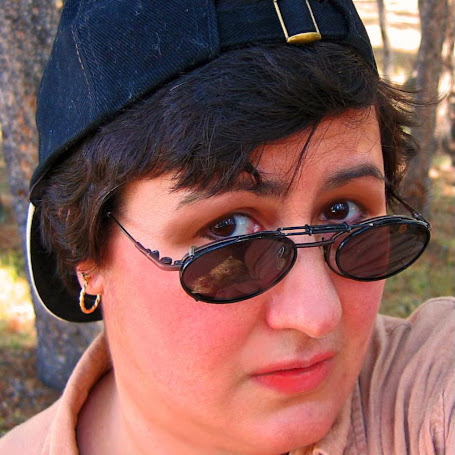
CB: This collection has been a long time coming. I’ve been working on it for years, and it started pulling together when I realized in all the poems I write, several were constantly about space, the universe, science, or some form of mythology. It’s always there, in the back of my mind, especially when standing outside in the cold looking up at the stars.
My poem “The Greater She-Bear” sparked the basis for the collection, it’s an amalgam of all my fascinations in one place.
OMC: After years of working with you, I am in no way surprised that science – physics, in particular – has such a large presence in your work. Did anything about these poems surprise you? Catch you off-guard?
CB: It always takes me off guard when I realize at the heart of my poems it’s always about relationships. My relationship with nature, space, science, of course, but also my relationships with family, my partner, the animals in my life.
I’ve always had an interest in science, but high school repeatedly told me I was no good at math, so science was something I shouldn’t aspire to. That’s kind of the way it was back then. They said, so, I believed. Then I went to college and had to take a science elective. I nervously chose Astronomy. To my surprise and delight, I liked the class, and found I had no problem calculating light years. I took my newfound science interest into Intro Physics, and loved it, although the math was harder. and trigonometry will never be any great love of mine. Then, I went on to the Army and they made me an Engineer. None of my buildings ever fell down, so take that high school math teachers.
OMC: Ha! That’s some good revenge, right there. And maybe some old teacher of yours would say that was the plan all along – to push you to find out for yourself what you can accomplish despite being told you can’t. And now, back to the poetry – were science and mythology always your territory, or was there some other path that led you to it? What other areas do you consider your territory as a writer?
CB: Mythology figured more prominently in my writing in my early years, and yes, I have a Persephone poem, I think everyone who likes mythology has a Persephone poem. There’s something about the story of love, loss, and relationships that calls to us. In my younger days I read a lot of mythology, mostly Greek, but also Roman, Norse, Hindu, and Native American. The gods and their antics always intrigued me. Here were these great figures the mortals were supposed to worship, and most of them were no better than us ordinary peasants. It brought them down to a level I could comprehend, and it seeped into my writing in my quest to make religion understandable to me. Religion became mythology with some guardrails.
I don’t consider myself as having territories, as much as having areas of interest that won’t go away. I return to the science/relationship well over and over again to find something new in something familiar. It’s my way of taking the puzzle pieces of life and slotting them together.
OMC: “Areas of interest that won’t go away.” Nice way to put it. It does sound more approachable than “territories.” And I think we all write to make sense of things, to make them understandable to ourselves, on some level, right?
Astronomy Lessons digs into a lot of family relationships – partners, parents, others – what was most difficult to put into a poem? Did you let anyone in your family read these before publication?
CB: It’s difficult to look back at parents, and family relationships with people who are gone from this world. I’m telling my side of the story, and it’s hard to put myself in the shoes of the others. I think untangling the relationships of the past is a form of therapy, and watching my poems tackle some of the tougher issues is hard, but necessary for growth. Although some days I don’t feel like growing and just let it all out. Then I put those poems aside for a week, a month, a year, and come back to them to see if my feelings have changed or intensified. Sometimes I put the poem away for good, having said what I need to say, but consider the topic still open for more poetic exploration.
Sometimes my partner reads the poems, especially when I want an outside perspective that still understands me. His insights are invaluable. I’ve never sent my poems to my brother to read, he’s not a poetry person, and from visits, I know we don’t remember things the same way, especially about relatives. He’s more forgiving than I am.
OMC: That’s interesting that your brother doesn’t read your work. I have that situation, too – I wouldn’t send anything to any of my siblings for feedback because our memories of family situations are so different. It goes to who we are, who we’ve become, how our experiences beyond our childhoods have informed our own stories. My most useful feedback comes from friends like you who are usually not invested in the story I’m telling the way a sibling or other family member might be.
What is your hope regarding what readers will take from Astronomy Lessons? Have you had any feedback that has surprised you?
CB: I hope readers will share my interest in science and mythology and let their minds wander to the stars. The takeaway I hope readers come to is that all things are interrelated, we can’t separate ourselves from relationships with other people, or the world around and above us.
I had one person tell me they didn’t expect to find humor in any poems, considering science isn’t known for its humor, nor is mythology. Although I find the gods pretty entertaining. My poem “Synthesis” came from a prompt in one of Diane Lockward’s newsletters and was published in her Crafty Poet II: A Portable Workshop book. Writing it, I felt over the top that day and the poem reflects that. My humor can be a bit warped. I’m glad someone out there appreciates that I can’t be serious all the time.
OMC: I love that message about all things being interrelated. Yes! And I love it when your poems are funny. Since I’m married to a scientist, the whole idea that science doesn’t have much humor has been completely debunked.
Do you have a favorite poem of your own from Astronomy Lessons?
CB: I actually have two favorites, the first is “The Problem with String Theory”, which is the oldest of the poems in the book and touches on my fascination with physics. The second is “Morning, Before the World Wakes Up”. It is a newer poem and combines my love of the night sky with my interest in relationships. It’s probably where I started to explore more of the relationship poems and branched out into less science, more people poems, the bulk of which will be in an upcoming collection.
The Problem with String Theory

The opening move involves the transfer
of wrapped string from one player to another,
fingers and thumb weaving diamonds between
empty spaces. It's a game as old as mankind,
and elegantly explains the whole lot—all known
natural forces, what the world is made of down
to the subatomic composition of the universe.

It's in the passage of filament from one person
to another where theory goes astray.
In the rush to take possession of the loop,
gravity falls out the holes and rolls away,
leaving us unable to explain the one thing
that would help us explain everything.

In the end, it doesn't matter, because it won't be
mathematical precision that pushes theoretical
physics out of the nest, but a length of cord
oscillating back and forth from player to player,
starting at Opening A, cat's cradle,
continuing onward in infinite combination.


Morning, Before the World Wakes Up

The dark before morning gets longer,
and we stop on our walk to the truck
to admire the planets and stars, enjoying
this slice of solitude before dawn darts
over the horizon. Is that big, bright

planet Jupiter or Saturn? Mars twinkles
red, Venus blinks shyly in the east. The
moon is a waxing crescent slice of
cantaloupe, ready to retire for the night.
Even at 5:30 in the morning, the world

is not ours. A few lights pop on in houses
along the street, a truck growls its way
to the stop sign on the corner. A calico
cat slinks home after a night of hunting
little nocturnal creatures. On the eastern

horizon, a tiny swath of morning purple
over the hills. The coming chill of autumn
hangs in the air, and we finally jump into
the warmth of the truck, glad we stopped
and took the time to admire the stars,

tucking the memory away to revisit at
dinner, after we've consulted the Internet
to find out whether it was Jupiter or Saturn,
only to discover they share the early
morning sky, companions like you and I.
OMC: Thank you for sharing those. I especially like the morning poem. And the hint of an upcoming collection is tantalizing!
I also want to share the very last poem in the book here, because it wraps up this collection so well and I love how it brings everything full circle. It’s also one that shows your humor.
All My Love, Earth

I keep you grounded—get it?
I crack me up sometimes,
but do you even notice?
I’m here under your feet twenty-four/seven,
giving support, stabilizing your boots
and backs with my terra firma.
I’ll admit my naughty twin gravity
plays a part, albeit a circumstantial one.

I tire of being taken for granted—the way
the sun tugs the flowers to attention each morning
and warms the soil protecting my tender lands.
I underpin as you examine the starry firmament,
ignoring what’s right beneath you.

You try and escape, invent planes, even rockets,
but sooner or later you return, place bare feet
to my rocky spine, sigh with contentment.

You love me, I know you do.

Why can’t you admit we were made for each other?
You’re made up of me, I'm made up of you. Star stuff.
We share 96% of minerals—oxygen, silicon, calcium,
iron, sodium, potassium, magnesium, aluminum.

Consider this: 53% of you is water, 71% of me.
Humans, sadly, never get my drift.
It all comes down to this:

Earth to earth, ashes to ashes, dust to dust.
I welcome you home.
At what point in your process did you come up with this particular poem? Did you know right away it would be the bookend to the collection?
CB: I was reading a science book (again) and the famous quote by Carl Sagan “The cosmos is within us. We are made of star-stuff. We are a way for the universe to know itself”. really struck me. I had to look up the elements that are in the human body, and in stars. I was also reading about the earth, and the two meshed in my mind, how we look to the stars yet forget about the cool planet under our feet. It came down to the question, “What does the Earth think of us?”
I always felt it would be a good poem to end the collection, bringing us full circle from wondering about the cosmos to appreciating what is right here with us.
OMC: Nice. I’m impressed with the amount of reading you do that goes into the poems. It all feeds the work, doesn’t it?
What do you feel is the most important thing you contribute as a writer in this time in our history? What do you think might be missing from the current literary landscape? Big questions, I know.
CB: I hope I contribute poetry that is accessible and touches on things people want to think about, like relationships and the world around and above us. The current literary landscape is more open than it used to be, but I think there is always room for more voices, especially the older poets among us. The 50+ set still has a lot to say, and experiences we can learn from. I think poetry being accessible in other forums besides lit magazines and MFA programs would be a great idea. Pushing poetry out into the world so it can’t be ignored. Maybe we need t-shirts with our poems on them, or flyers we tack up on telephone poles. I see some innovative things being done, like the gumball machine poems. How wonderful!
OMC: Agreed! And there are those people who set up typewriters in public spaces and give people poems on the spot. That’s a fun way to get poetry out there, too.
Constance, thanks again for having a conversation with me about Astronomy Lessons, poetry, and the way you work as a writer. Before we go, what projects do you have on the horizon?
CB: Thanks for the opportunity, Kath. I have several upcoming projects, I am working on a new poetry book called The Family Rate, where I explore relationships with people in my life past and present. I’m sure some mentions of the cosmos will sneak in there. I also have a fantasy novel coming out early in the new year, The Demigod’s Daughter. Writing poetry and novels fills my need to write very short stories (poetry) and sprawling epics (novels). In between I work on editing Gyroscope Review and on my artwork. Got to keep busy, and no matter what anyone says, ADHD is a superpower.
OMC: I’ll look forward to your next big thing!
Below, I’ve listed where readers can get a copy of Astronomy Lessons, as well as links to Constance’s other work.
Astronomy Lessons by Constance Brewer (Gyroscope Press, 2025) $14.99 paperback/$3.99 Kindle
Book release announcement: https://constancebrewer.com/2025/11/18/astronomy-lessons-new-poetry-book/
Amazon paperback: https://www.amazon.com/Astronomy-Lessons-Constance-Brewer/dp/173678207X/
Amazon eBook: https://www.amazon.com/Astronomy-Lessons-Constance-Brewer-ebook/dp/B0FXJCDFW1/
Website: https://www.constancebrewer.com
Facebook: https://www.facebook.com/constance.brewer
Headshot and book cover photos provided by Constance Brewer.
 One Minnesota Crone
This sounds like a wonderful book. I loved this poem “Morning, Before the World Wakes Up” as I’ve done the same thing on beautiful early mornings, wondering which planets I was seeing. ⭐⭐
LikeLiked by 1 person
❤
LikeLiked by 1 person